Showing posts with label solar. Show all posts

Friday, November 13, 2009

One Thousand Dollar Giveaway :)

In the spirit of awards and the launch of our new website, Lunt Solar will be giving away a total of US$1,000.00 in gift cards to be used toward the purchase of any Lunt product at any authorized Lunt dealer worldwide..

Entries for this event should be received by December 31st 2009. All entries received after that will be included in January 2010. Award winners will be notified in early January.

How do you enter??

Simply submit; a series of images with related text, an editorial article, a "how to" article, educational article, etc.. Keep the submission relevant and original to anything Solar. It doesn't have to be observing related.

All submissions will be reviewed and prizes will be awarded to those that are interesting, fun, creative, and entertaining.

Submissions will be placed into our blog or on our website.

Please include return contact information in all submissions.

Submissions and questions should be sent to: sales@luntsolarsystems.com
Please use the sales e-mail until we have finished uploading the completed website and accounts this coming week....

Check back often for more info and updates.

Wednesday, November 11, 2009

Popular Science Best of What's New 2009

A quote....

"For 22 years, Popular Science has honored the innovations that surprise and amaze us - those that make a positive impact on our world today and challenge our views of what's possible in the future." said Mark Jannot, Editor-in-Chief of Popular Science.
"The Best of What's New Award is the magazine's top honor, and the the 100 winners - chosen from among thousands of entrants - represent the highest level of achievement in their fields."

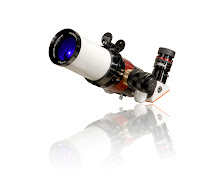
We are obviously very pleased to have received the BOWN 2009 award in the Recreational Catagory for the New LS60 Pressure Tuned Telescope. See page 58 of the December issue, or check on line when it goes live.

Although it has long been known that altitude changes move the center bandpass of an air spaced filter, it wasn't until June of this year that the reality of a system that incorporates this technology was brought out into the mainstream. A simple system that simply increases and decreases the air pressure inside a sealed cavity.
This change in air pressure results in a change in refractive index which alters the interference of the light as it enters the cavity. Simplicity! This system basically does the same job as heat would do to a solid design, but instantly, without power, at the turn of a wrist.

Look for some exciting new developements from Lunt Solar in the next 6 months. Along with some R&D projects which I will continue to discuss as I can, we are close to completion on the developement of several new products..

Thanks! to Popular Science for recognizing Lunt Solar as a leader in it's field.

Tuesday, November 10, 2009

First Week of November (Last Part)

As of November 1st we officially began to move into our new expanded facilities next door. Our landlord, Steve, has been nice enough to let us store our cases, shipping containers etc. over there for the last few months until the facilities were ready. The new facilities increased our square footage by about another 40%.

The expansion incudes a few more offices, a nice education/AV area with kitchen and restrooms, and in mid area a nice big fully climate controlled room for our upcoming coating facilities with large double doors to our current assembly area. The back of the area has been heated and cooled, but is currently used as a main storage area. During the buildout of our current area, we had the fore thought to put 800 Amps of 3 phase power in, so the new area has plenty of juice to keep us going.

I'll have to get some pictures up, but it's hard to believe that we first moved in to the current building in February of 2008. The building had a small kitchen, and a lobby. There were NO bathroom facilities. (We made friends with the neighbors very quickly ;). The first 2 Continuous Polishers were working in the kitchen area on very long extension cords. I had an electric heater on one wall and an air conditioner on the other, both fighting to keep the un-insulated room at +/-1 degree.

6 months later we were able to move out of the kitchen and populate the new building just in time for our open house..

14 months later we are still expanding and I am still working very hard to increase our capacity to meet the ever growing demand.

Monday, November 9, 2009

Outreach in Riverside, CA

I wanted to share my experience with this new gear.

I don't know what Andy does when he matches this scopes and filters up but I am just completely blown away by the views with the new LS60THa scope and my original LS50FHa filter. This set up starts to mimics views I had years back with a buddies older Coronado Solarmax 90 filter on a TV101 scope! I knew double stacking was the way to go but seeing it real time with this latest technology really reinforces it.

I got first sunlight Saturday morning and could see so much detail on a new emerging active region that day. The bright spot with detailed twisting was very easy to see and study. The orange peel was so intense that the sun's globe was starting to show the classic 3D quality of truly high end H-Alpha rigs. And, amazingly, the double stack even at 50mm aperture was still able to show the prominences extremely well even while showing all this surface detail. How can this be!!? Most smaller aperture double stack H-Alpha filters and scopes in the past just showed higher surface detail at the strong expense of easily seen edge detail. Not both at the same time. This little additional gift to the views is just more iceing on the solar cake.

Using the scope and filter set up at the large STEP Conference outreach here in Riverside for the last two days presented easily seen surface detail for every single student and teacher. Every single one. No guessing. There was never any......"well I see it sort of but I'm not sure". Even the younger children could view the orange peel, filaments and active regions clearly. Lots of smiles or "that's so cool!" or "that's really our sun? Are you kidding me?....awwwwesome!!"

I now have the ultimate solar outreach tool that can be use to share our star with many thousands of the public of all ages over the years. I have tools to do serious outreach all day long. Not just at night. For an outreach junkie like me this is true Nirvana.
I thank all of you guys involved at Lunt Solar Systems for bringing this company to market. You folks really are continuing the vision of bringing H-Alpha observing to the masses. All I can say is your service and products speak for themselves.

.....Thanks for these very kind words, we look forward to hearing about ongoing outreach from Riverside and in your area.....

Thanks again,
P. Agins
Riverside Astronomical Society
Outreach program

Saturday, November 7, 2009

First Week of November (Part 1)

The first week of November has flown by. A week ago today we were getting ready for Holloween night, it'll be Thanksgiving before you know it!!.

Testing, new products, and website were the projects of the week.

The image at left is the New LS152T/PT. This is currently the largest dedicated telescope that we manufacture. This is a working prototype and was on display at PATS. It had been my intention to take it outside on the Sunday, but the mount that I was going to borrow was sold on Saturday. I did try the mount it was displayed on, but that was a drop waiting to happen.

The internal lens sets for the system are almost finished. The prototype lenses were "off the shelf" and weren't quite optimized for the system proviving only about a 70% sweetspot in the center of field. The production lenses have been designed to the optical system. They are also slightly larger than the prototype given more aperture to the beam.

The LS152 contains an unobstructed 60mm HR (high resolution) etalon. This is a new etalon design and provides for high signal to noise ratio which greatly darkens that background allowing for stunning contrast on edge details.

I have already had one person ask about the unobstructed 60mm, and before the questions are raised and the assumptions made in other forums, I will state that we will not be introducing the LS60F until Summer of 2010. Due to the very high demand for the other products, we will not be tooling this particular size at the expense of current production. Our LS60F production is currently limited to the LS152T, and takes the place of the production schedule for the LS200T.

The estimated US$ retail for this instrument is $7,495.00 (this does NOT include the CaK module). For those that have the LS200T on order you will be receiving the LS152T at no additional cost. If you purchased the CaK option for the LS200T you will also be receiving that at no additional cost. As you know, the LS200T was introduced at 5k. It was the intention to increase this price once the system was shipping and had good reviews. As I will explain in another post, the LS200T could never meet both the performance requirements that I had set for it, while also meeting the strict safety requirements. The trade offs were leading to unacceptable compromizes on both sides. Safety will always be of the highest priority to ANY solar product.

For those that choose to accept the exchange, I promise that you will be receiving a solar system that exceeds my expectaions for what the LS200T was going to do. By defualt the delays have allowed for the incorporation of a 60mm etalon instead of a 50mm. The new HR (high resolution) coatings will be incorporated standard, and the value of the package itself will provide a good return on investment should you ever choose to sell.

For those that cannot accept the exchange, we will refund any deposit in full.

Monday, November 2, 2009

Recent Trip to Mt Lemmon Sky Center

This image was recently e-mailed to me from my Landlord. He and a group from his church spent the day and part of the evening at the Mt Lemmon Sky Center.
For those that attended the Open House at Lunt Solar a year ago, you will remember the visit to 9,000 ft. It was about this time of year and although the weather was clear and sunny, the temperatures were very cold.
Shortly after the visit we donated a LS100T/PT to the facility in appreciation of their hosting the event and providing everyone with a look thru some of their large scopes. Everyone had a great time.

We chose the LS100T/PT specifically because of the high altitude. A large aperture scope in great skies without the issues of air pressure to the air spaced etalon.

I hadn't given much thought to the scope on Mt Lemmon until I received this picture. Steve and the group were wandering around the domes, when Steve recognized the name on the 100T. He'd never actually looked thru one of my larger scopes before and expressed his excitment at having the chance to look thru one of our systems "in the wild". He was very pleased with the view. Everyone in the group had a chance to view the active region of last week.

This scope was provided to allow the Center to provide visitors a chance to view the Sun. The Mt Lemmon Sky Center is open to the public, and often receives large groups of children and adults who are interested in learning more about astronomy as well as the nature of the mountain.

For more information on the Sky Center you can visit http://skycenter.arizona.edu/

The facilities were remodeled about a year ago and I have to say that they did a fantastic job. From large kitchen areas, to private bedrooms, and a first rate meeting/audio visual area.

We are hoping to visit the center at our next Solar event which is now tentatively planned for March 2010.

Friday, October 30, 2009

Pressure vs Doppler Shift (Part 3)

The diagram at left shows the system has been fully pressurized. This pressure is equivalent to about a 12,000ft altitude change.
The air inside the sealed chamber has been compressed due to the reduced volume. As a result the refractive index of the air has increased and caused the CWL of the etalon to move to the blue or high energy side of the Hydrogen wavelength.

Due to the fact that there is no tilt involved, the image field remains flat and very precise.

Traditional tilting allows the Doppler shifting across the field in a plane perpendicular to the axis of light. The user can see a change to the image that allows for the viewing of proms and then filaments. The optimum position is when the proms and surface are both fairly detailed. Overtilting will tighten the bandpass but will also produce a banding effect. The resolution under the band is higher, but at the expense of the entire field of view.

People often feel that the entire field should be as good as the area created under the band. If this were possible, the systems would be spec'd at a much lower bandpass. If a band occurs, the system has probably been over attenuated.

True Doppler Tuning allows for a shift into and away from the user. Adding a 3D component to the viewing experience.
While it has minimal effect on proms due to their being at the edge of the disk, it does have an effect on filaments and active regions.
While looking at a filament at the center of the Sun the user has the ability to Doppler shift from the base of the filament to the tip, following the filament thru it's structure toward you and away from you. Allowing for enhanced visual and imaging capability for the observer as well as a research tool for the avid hobbyist.
The tuning system provides an order of magnitude more precision to the tuning of the desired features.

We are working on designs to the LS100F and the LS100T/Na utilizing the same technology.
The LS100F will be remotely operated for those that have this filter mounted on a long FL scope and do not have 4ft long arms.
We are currently manufacturing the LS60T and the LS100T via this technology.
The LS60T is fully upgradeable to the new Pressure Tune System at any time. However, it does require a return to the factory.

End of Part 3

Pressure vs Doppler Shift (Part 2)

The diagram shown at left indicates that the air pressure inside the sealed chamber has been increased. At this point the CWL of the bandpass is at 656.28nm. At this position we are looking at the Hydrogen-alpha line and the energy associated with that wavelength.

The sealing of the cavity is done via the collimating and refocus lens so that the etalon itself is isolated from differential pressure.
The piston applies from zero to a pressure that is equivalent to taking an etalon from -500ft to +12,000ft above sea level.
This has the added benefit of making the etalon system altitude insensitive.

In addition the etalon can be used from -50 to +200 degrees Celsius due to the fact that the tuning can compensate for the very small changes that heat would have on the "feet" of the etalon.

I have gone into great detail in prior posts regarding the compromises of tilting internal to a telescope. Only very small adjustments to the tilt of an etalon can be done otherwise the etalon system will begin to suffer from the off axis rays of the re-collimated beam.
People have noted that in internal tilt systems the CWL is very sensitive to even small adjustments of the tilt wheel.
By removing the need for tilt we have placed the etalon in the most optimized position possible.
We install a very accurately tuned etalon. This etalon is tuned to the red side of the CWL. Given that it is already tuned to the red, the user has the ability to shift the tune of the CWL to the Hydrogen-alpha line and then Doppler tune to the blue or back thru to the red.

Due to the fact that there is no tilt involved, the image field remains flat and very precise.

End of Part 2

Pressure vs Doppler Shift (Part 1)

Lunt Solar Systems recently introduced the new Pressure Tune system, or Doppler True Tuning system.

The image at left shows the basic outline of this system. The internal etalon is at ambient pressure. The tuning of the etalon is slightly low, putting the Center Wavelength (CWL) at the red wing of the Hydrogen line. This provides a view of less energetic features in the Chromosphere.

How does it work and what does it do?

The system works because the etalons used in the current Lunt designs are air spaced. These air spaced etalons have been typically tuned to the Hydrogen-alpha line via several mechanisms.

The first is the spacing of the air gap between the high reflective surfaces of the ultra flat plates. By changing the spacing, you change the CWL. The distance of this spacing is generally held constant because the refractive index of the medium between the plates (air) is relatively stable at ~1.
The center wavelength can be manipulated from there by slight tilting of the etalon. This changes the angle of the light at the interface of the high reflector/air layer, having the effect of moving the center wavelength toward the blue.

Slight changes in barometric pressure and/or a change in altitude will effect the CWL due to the change in refractive index of the spacer layer.
These changes can be compensated for by additional tilting provided that the etalon is tuned to accomodate those changes.
Taking an etalon that was tuned at 100ft to 10,000ft would certainly not be within that range.

In the past I have manufactured sealed etalon systems for space flight.
These etalon systems were designed to work in a sealed vacuum. As a result they were manufactured as very highly tuned etalons. By placing them under vacuum, the tuning lowered . Tuning was done to ensure that at full vacuum the etalon was on band.
Additional fine tuning from there was done via heat due to the fact that the vacuum could not be adjusted.

Our technology utilizes air pressure and not vacuum.

End of part 1

Thursday, October 29, 2009

R&D Projects at Lunt Solar Part 1

It's probably doesn't come as any surprise that Lunt Solar Systems LLC is involved in R&D projects outside the field of Solar Filters and Telescopes.
But it is because of our highly technical and specialized skills that we are often asked to develop unique optical elements that fall within our capabilities and my interests.
Some of these R&D programs are confidencial. Some of the ongoing projects are not, and may not only be of interest, but they may encourage readers to suggest other uses for these technologies.

One of our more recent projects has been the developement of a novel solid etalon design.
The intial concept was for the design of an ulta thin, ultra stable, ultra precise, and ultra narrow bandpass micro etalon.

The project's scope of work consisted of manufacturing a solid etalon that was approximately 0.3mm thick (0.012") at the Hydrogen-alpha line.
Multiple matched etalons needed to be produced. The desired size was 4mm x 4mm.
The Hydrogn-alpha emission line was chosen due to our knowledge of manufacturing at that specific wavelength. However, Hydrogen-alpha is not the desired wavelength of the finished product.

The results have been extremely succesful.

At Lunt Solar we produced what can essencially be referred to as a wafer etalon.
The solid etalon was manufactured from a 80mm piece of low expansion UV grade material. (not zero expansion).
The "spacer" layer was polished to 0.3mm thick and send out for testing prior to further work. We needed to show verification of the spacer layer's precision prior to going to the next step.

Results:

The Wafer was first tested for surface flatness. Surface flatness was not the concern given that the etalon would be used in transmission.
It was the Transmitted Wavefront that was specified.

As you can imagine the wafer did suffer from some surface error due to being held in a fixture.

The surface flatness was measured at 1/6th of a wave, some of that coming from astigmatism due to the fixture point.
Power was the major contributing factor to this error due to the method of manufacture.

The Transmitted wavefront results were very encouraging.
The interferometer showed a peak to valley error over 75mm (the aperture of the system) of 1/61th wave at 532nm. The RMS being better than 1/250th wave (the limit of the test system).
This test was over 75mm. The system was not capable of realizing a measurement over 4mm aperture, and the engineer was not able to speculate just what that result would be could it even be measured.

These results were followed by some interesting conversations with the test facility who wanted to know how we had tested the wafer ourselves.
For those that have visited Lunt Solar in Tucson, you will know that I test ALL optics for flatness by eye only.

The wafer was sent out for coating via a low temperature, ion assisted process. The wafer was coated on both surfaces with what I now refer to as the new hybrid high reflector.
Some initial tests needed to be done to assure a "tune" at the desired wavelength.
In this case we tuned slightly low of Hydrogen-alpha in order to utilize the standard method of heat to bring the etalon accurately on band.

The end result was a pellicle wafer of about 80mm diameter. Given the highest degree of precision for the entire etalon, we could now be assured of matching etalons of 4mm x 4mm after the wafer had been diced.

The net result as far as specifications go are as follows:

Bandpass: 0.2 Angstroms
Free Spectral Range: 11 Angstroms
Finesse: 27

A few technology applications immediately come to mind given the controllable FSR and the narrow bandpass. I would certainly like to hear your thoughts on possible applications as well.

I am obviously excited about the prospect of getting this system assembled into the back end of a SCT telescope very soon. The wider acceptance angle of this design vs a conventional higher index spacer material will make the modification to existing SCTs in the market fairly simple and compact.
The fact that the etalon itself is thin and has little mass will allow for rapid temperature change and stabilization.
The use of the proven materials will allow for a mass-produceable 0.2 Angstrom bandpass system with a single etalon. I can hear the calls for a double stack system already...

Moving outside my area of expertise and free thinking for a moment...

The product is of a robust solid design and the CWL of the system can be fixed to a specific wavelength or tuneable.
The thickness of the system lends itself well to the bonding to CCDs. Maybe multiple etalons can be bonded to a single CCD to provide a chemical signature detector?
I have thought about it's use in applications such as ionized gas/chemical detection for a while.

Used in these applications the signal to background noise ratio would be of huge advantage, eliminating all background noise and providing >90% T at the desired wavelengths.

We provide 0.5A bandpass looking directly at the Sun. Ambient daylight would be of no issue.

Ancillary light sources such as laser or short wavelengths could be used to further excite the desired compounds?
Are there military applications for ionized gas/chemical detection for munitions, gunfire etc?? The addition of signature trace elements to munitions that can be optically traced?

Other applications may include laser line stabilization, optical fiber multiplexing, etc...

This is just one of our current R&D projects. It is thanks to this project and a few others which I will outline in another blog that we are rapidly improving the performance of our core products. Success and failure though our ongoing research projects are already seeing a positve impact on the contrast and resolution of even our most basic systems..

Upcoming products will focus on enhanced performance and the ability to accessorize systems for use as educational tools.

I encourage your feedback and comments and thank you for reading.

The Sun and "what am I going to see?"


"What am I going to see??"..

Given today's audio visual technologies, special effects, and image enhancement software, it's not surprising that people expect to see everything there is to see the moment they put their eye to the eyepiece for the first time.
Some walk away having seen nothing. Not taking the time to see a Star in action.
Most others are mesmerized by the site. Cannot believe that they are actually looking at a real Star, our Star. The longer they stay, the more they see. The more they see, the harder it is to walk away.

There's no show like it at night. And as I like to say "It's not a sight you will see everyday" I guarantee tomorrow will be just as unique and equally different.

The Sun is the one object in the sky we don't usually look at.

As with any other hobby, it takes time to learn and how to observe. Much like walking into a dark room from outside, at first the eye sees nothing. Does that mean there is nothing to see?
After just a few minutes, features can be made out, and after several more minutes you can clearly make out all the objects in the room and can navigate the room with general ease.

I once set up a scope for a customer who, after 2-3 minutes, declared that the equipment was somehow faulty. All he could see was a red ball, there were none of the features that were shown in the brochure???.
For comparison I asked how long it took him to learn to drive. "Only a few weeks"...
Hmmm, was the car broken because he couldn't drive it in the first 5 minutes?

Solar Observing is much the same as the dark room.
Up until the point that you put your eye to the eyepiece, the Hydrogen-alpha line was only 0.01% of the total light that your eye sees on a daily basis.

However, what a magical 0.01% that can be. Ionized Hydrogen-alpha. By far the most interesting and entertaining emmission line from the Sun.
I'm amazed that the human eye can even resolve this very narrow bandwidth at all.

To answer the questions; "What can I see?"

First and foremost. Everyone's eyes are different. Please do not walk up to a scope and assume it has been focused to your eye. Take the focus knob, defocus the image, and bring it back to focus. The features you are looking at are narrowly contrasted and a sharp clean focus is essential. As features become apparent, refocus the scope. You will be amazed at the view once the focus is sharp.

To focus on the Sun, simply look at the edge. Focus is achieved when the edge of the ball is sharp against a black background.

At first you will see a red ball. Your eye is basically saying, "yep, that's red against black, and that's what I will show you".

Why?

During the day your eye's pupil is very small. It is reducing the light into the eye to a comfortable level.
When you put your eye to a telescope your pupil will typical dilate quickly (open) to compensate. The image is basically red against black, and the eye has learnt to show that information quickly.

However, after 10-20 seconds your eye is adjusting to the reduced light. The more light outside the scope you can block, the better the adaptation.
As you look around the edge of the disk, start at 12 o clock and work around, you will come accross what look like flames protruding from the rim. Small flame like structures are Spicules and Prominences. Large flame like structure can be large Prominences, Flares, and even Mass Ejections. Obviously, the larger the structure, the easier it is to see.

As you study these things, your eye will quickly perceive the lighter and darker contrast of the narrow bandwidth. The feature become very aparent and the flame like details are fully visualized. This is generally followed by a "WoW!" from the observer.

If I don't hear the "WoW!" I know they haven't SEEN the Sun yet.

The features you are looking at can last hours and even days. As the Earth rotates around the Sun, the features will appear to move accross the Sun's surface.
This allows the observer to see the details in various angles and positions both off the edge of the Sun, and in cooler contrast to the Sun's bright and hotter surface.

Over the next few years events such as CMTs (Corronal Mass Ejections) and flares will become more frequent. They are by far the most awe inspiring events that can be viewed thru a Solar scope in real time.
Often starting as a large Filament, or Active Region, they quickly develop in energy, resulting in a Mass explosion from the Sun's surface. Many pass harmlessly by, while others can hit the Earth head on. This can disrupt our communications, electricity, and provide awesome light shows as the Earths Atmosphere is effected.

The cause and effect can be seen and felt. The next time you see a flare hit the Earth and you cell phone doesn't work for a while, you'll know why.

Today's Lunt Solar 60T/PT Solar Scopes are ideal for both the casual observer and the avid hobbyist who seeks to study the Sun's day to day changing activity.

People are becoming far more Solar aware. From the effects of global warming, to the distruption of global systems, to the energy that we can now harness.
The Sun can teach many aspects of science from the warmth of a sunny day, to the reaction in plants essential to their growth, to the harnessing of Photons for electricity, to the Sun burn on your skin.

I often do outreach to school kids. Both the kids and the parents get a hands on
lesson with the scope and I generally teach the science basics while they look thru the eyepiece.
Kids adapt quickly and often see activity on the surface right away. They talk about volcanoes, fire, and fuzzy worms crawling on the surface. They are eager to see, and eager to learn.
Set up a scope sometime during the day and invite people to look.

"What can I see?".....

An ever changing and dynamic Star in real time.. Our Star.
The violence of the upcoming Solar Maximum.
The cause and effect of the Sun's activity.
You will learn to see the fine feather like details of the faintest prominence. The bright berth of a Solar Flare, it's rapid growth of energy, and it's departure from the Sun's surface into space.
You will see catapillar/worm like strucures ( Filaments) snaking across the Sun's surface, spirals of gas activity spewing and churning from active regions above Sunspots, and if your lucky, the violent eruption of an X class flare from the surface, an event which is highly energetic, fast evolving, and really does provide that full appreciation of just how close we really are.

The Beginning of a new Solar Maximum

The Sun is our Star, and as you would expect, our Star is hot, bright, dynamic, and sometimes quite violent.

At 93 million miles away, we are ideally placed at a point where the Sun provides just enough warmth and energy essential to our living planet, Earth.
At only 93 million miles, the Sun is close enough for us to view it's surface thru a relatively inexpensive scope from the comfort and relative safety (Sunscreen please) of our backyards on a clear and warm day.

What! Astronomy during the day? Lunt Solar can show you how.

To a growing many, daytime observing is the only time they can see a Star. To teachers it's an ideal way to bring the science of a living Star to school kids, and to parents the exploration of the Sun shared with their own children. No more staying up until 2AM in the pitch black and potential cold to visualy view pinpoints of light.

What's more fun than looking at that fireball at the center of our own Solar System?

For the thousands of people who already own a Solar Telescope you've already had a hands on appreciation of the dynamic nature of the Sun's daily cycles.
Given that the hobby of Solar observing really didn't become mainstream until the late 1990's, relatively few have probably witnessed the ferocity of a Solar Maximum.

For those that began the hobby in the last few years, you may be wondering what all the fuss is about.

The Sun has been at a slightly extended Solar Minimum of about 1-2 years. This is a time of reduced Sunspot and Flare activity. Being a living Star, the Sun's activity "breathes" in and out over a period of about 12 or so years.

The Sun has been holding it's breathe.

For those that are interested, Solar Minimum is now over, and the next Solar Maximum has already begun. Getting a Solar Telescope delivered by Spring maybe just in time.

The Sun has begun to let it's "breathe" out. As it does so over the next few years, the Sun will become far more active. There are already daily signs of increased Solar activity. My daily observations compared to 1 year ago clearly indicate an increase in daily Sunspot count, Prominence activity, the apprearance of Filaments on the surface, Active Regions, and even the rare Mass Ejection.

So how do you see the Sun?

Although the core technology, or the Etalon, of Solar Telescopes has not changed over the last century, the idea of actually looking at the Sun didn't catch on in
the mainstream until the late 1990's. Before that time, Solar observing was left to the "professional" elite who paid out 10s of thousands of dollars for the precision optical systems required.

Over the last 15 years, the price of a Solar Telescopes has dropped to a point where the "amateur" can make the choice between a good nighttime scope, or a great daytime scope. Even today's basic Solar Scopes are by far the most advanced ever made.

With entry level Solar Telescopes at $600, and the well fitted LS60T/PT at $1400, the ability to enter the rapidly growing hobby can be achieved by many, and before we make a comparison to that nighttime scope, lets not forget that the LS60T
contains 17 precision aligned filters and optical elements that provide redundant 100% safety allowing us to view the Hydrogen-alpha emmision line (ionized Hydrogen)
at a bandwidth of less than 0.7 Angstroms (the spectrum is 7,000 Angstroms wide), while reducing all other wavelengths to absolute zero.
That night time scope has 2, maybe 3 lenses/mirrors.

Clubs and events are popping up everywhere. Solar viewing events are being paired with nature viewing events like hiking and birding.
Many cities have yearly science expos where Solar vendors are now showing and discussing the latest equipment, technology, and current solar events.
Solar forums are growing. People are learning to image the sun quickly and easily with simple camera equipment, while others sketch what they see visually.

Education and learning thru hands on observing.

Over the next few months and year, we will be working on promoting the Solar Community thru our new web magazine at www.luntsolarsystems.com. Providing education not only on the use of our Solar Telescopes and Equipment, but also the education of the science of the Sun itself and it's effects on our planet.